ALGAVE HOUSE
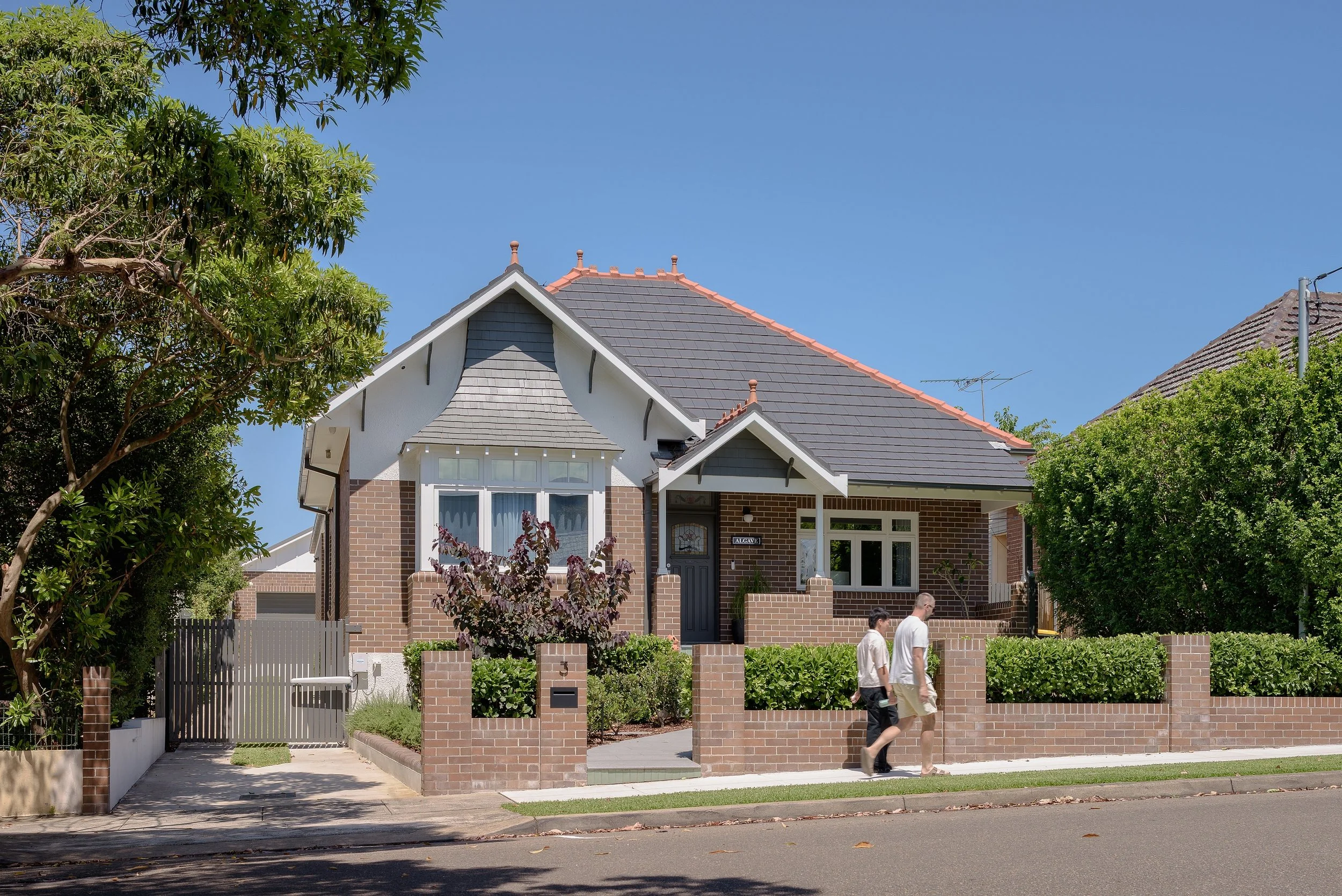
Located within the tightly controlled Haberfield Conservation Area, this project is a considered restoration and renovation of a family home that carefully balances heritage accuracy with contemporary liveability.
The original bungalow had undergone a series of unsympathetic alterations over time, eroding its architectural clarity and street presence. The front façade has been meticulously rebuilt using a historical photograph as a key reference, reinstating original proportions, materials, and detailing. The result is a faithful reconstruction that restores the home’s relationship with its streetscape while meeting modern standards of comfort and performance.
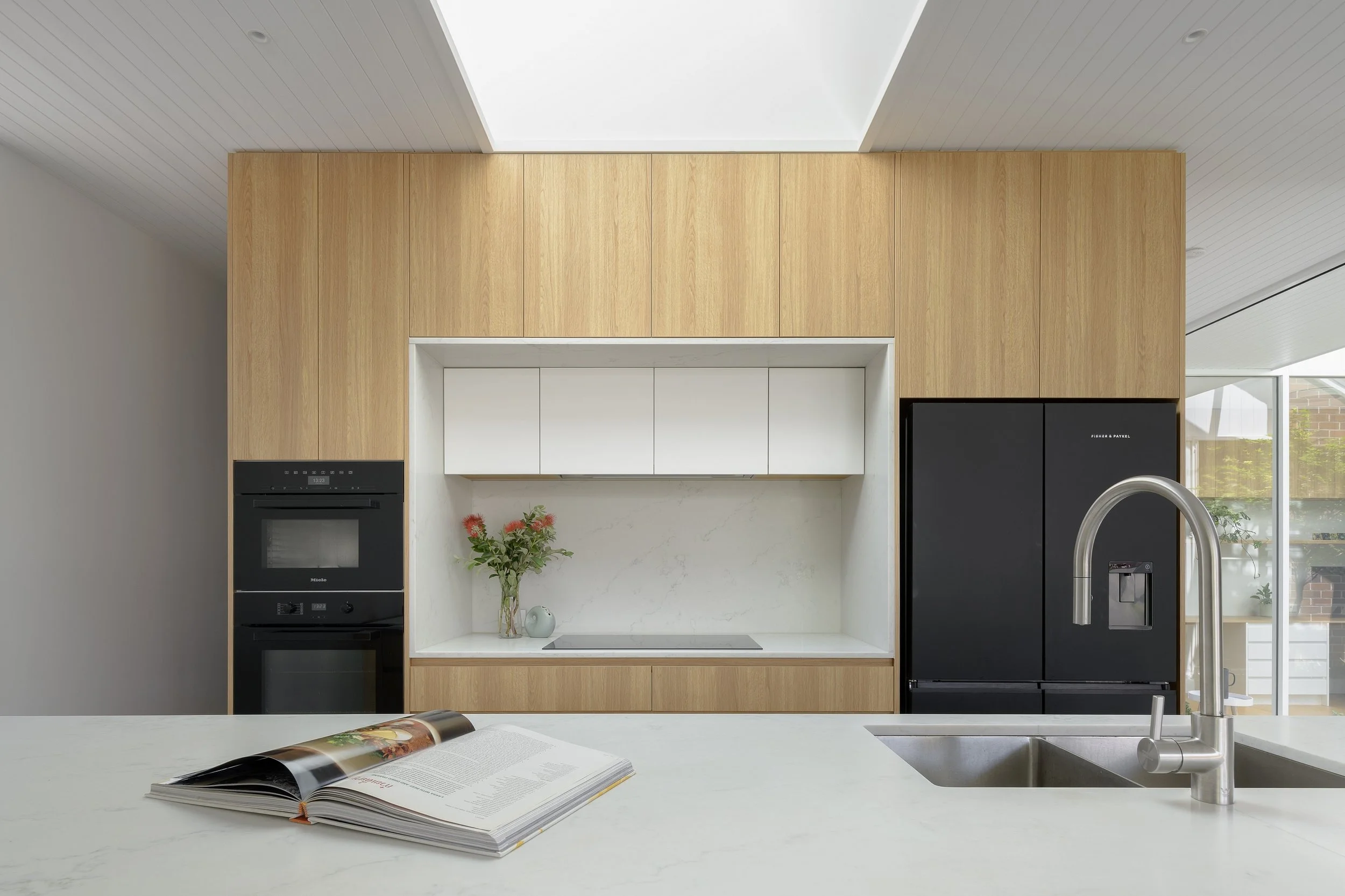
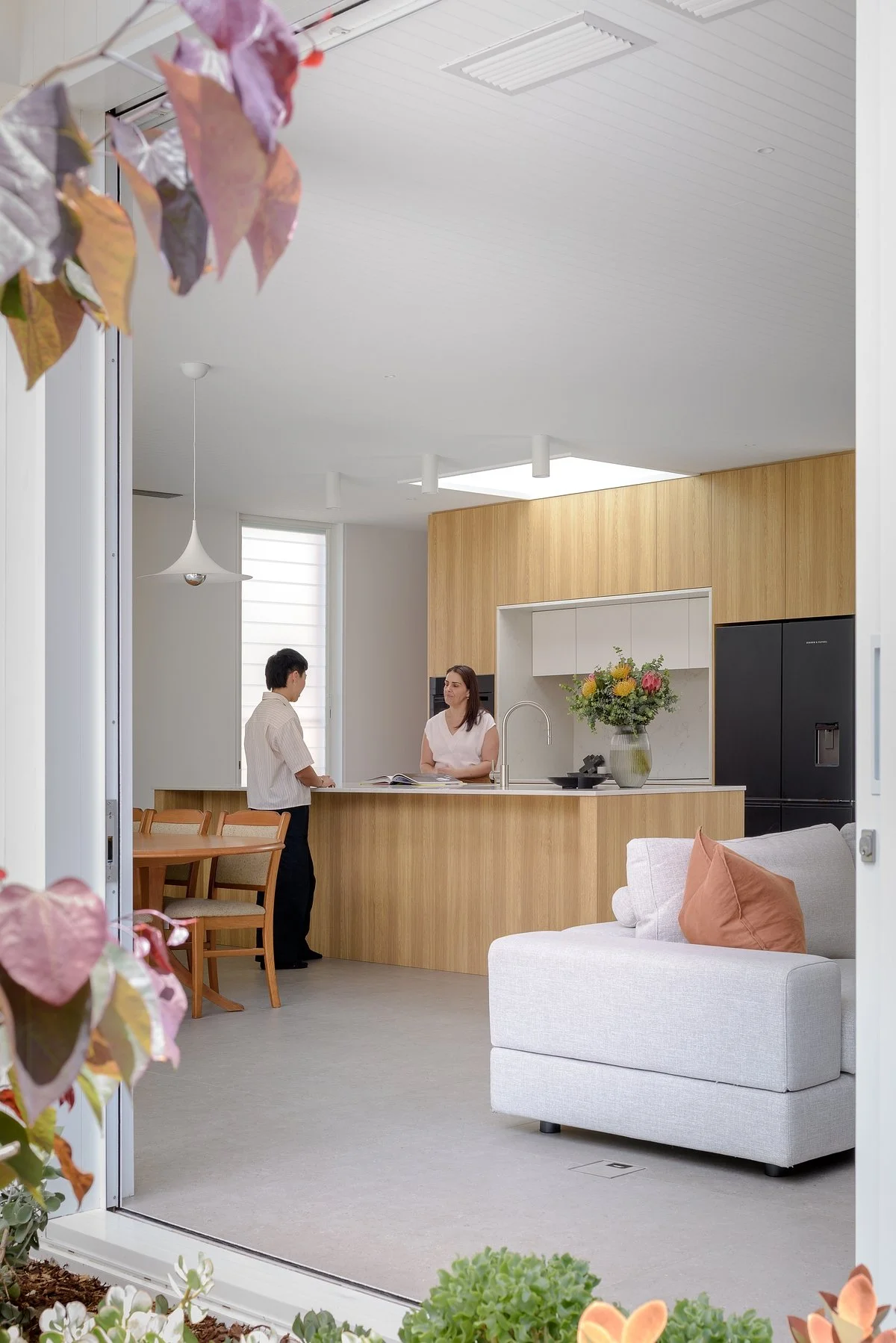
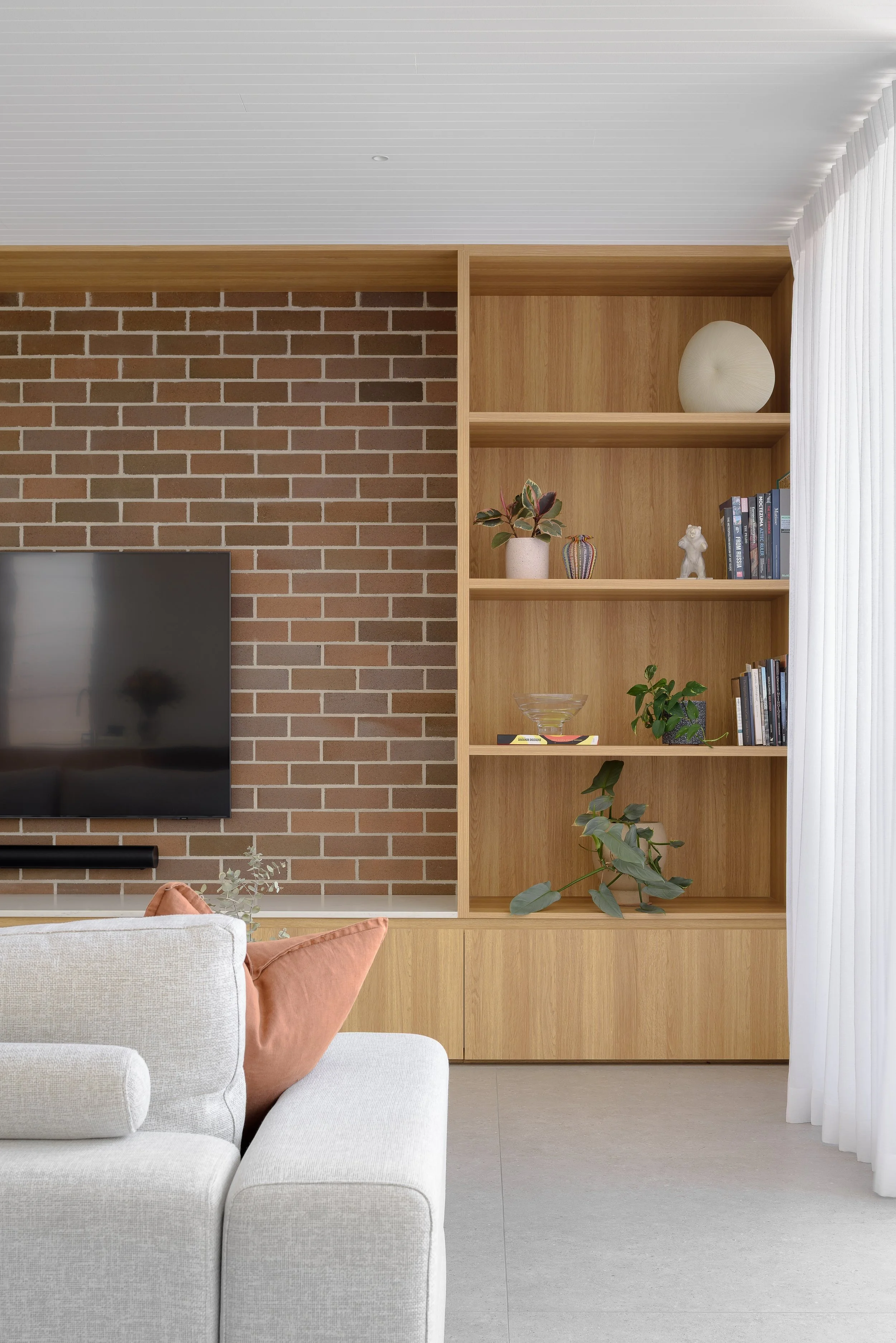
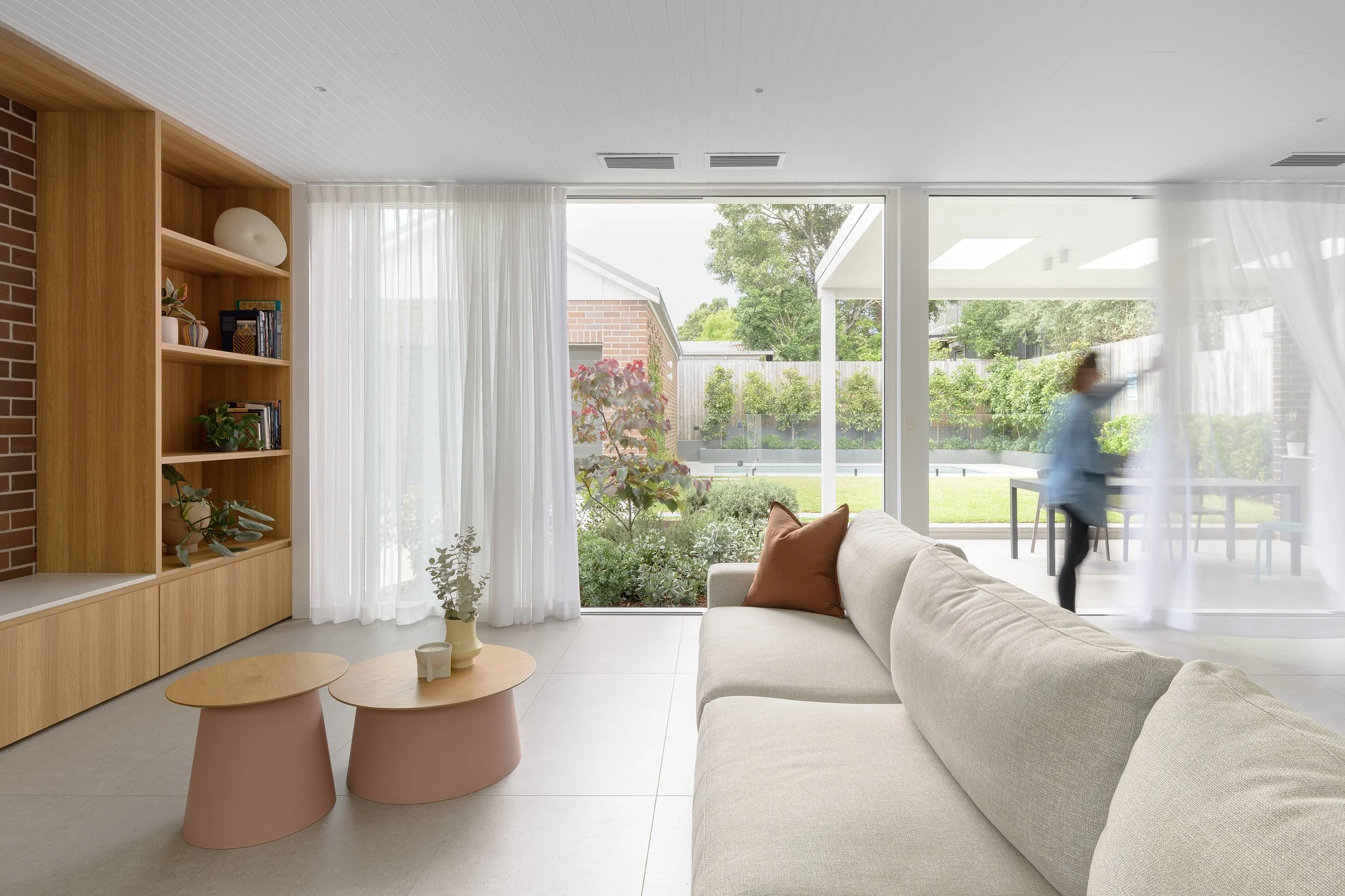
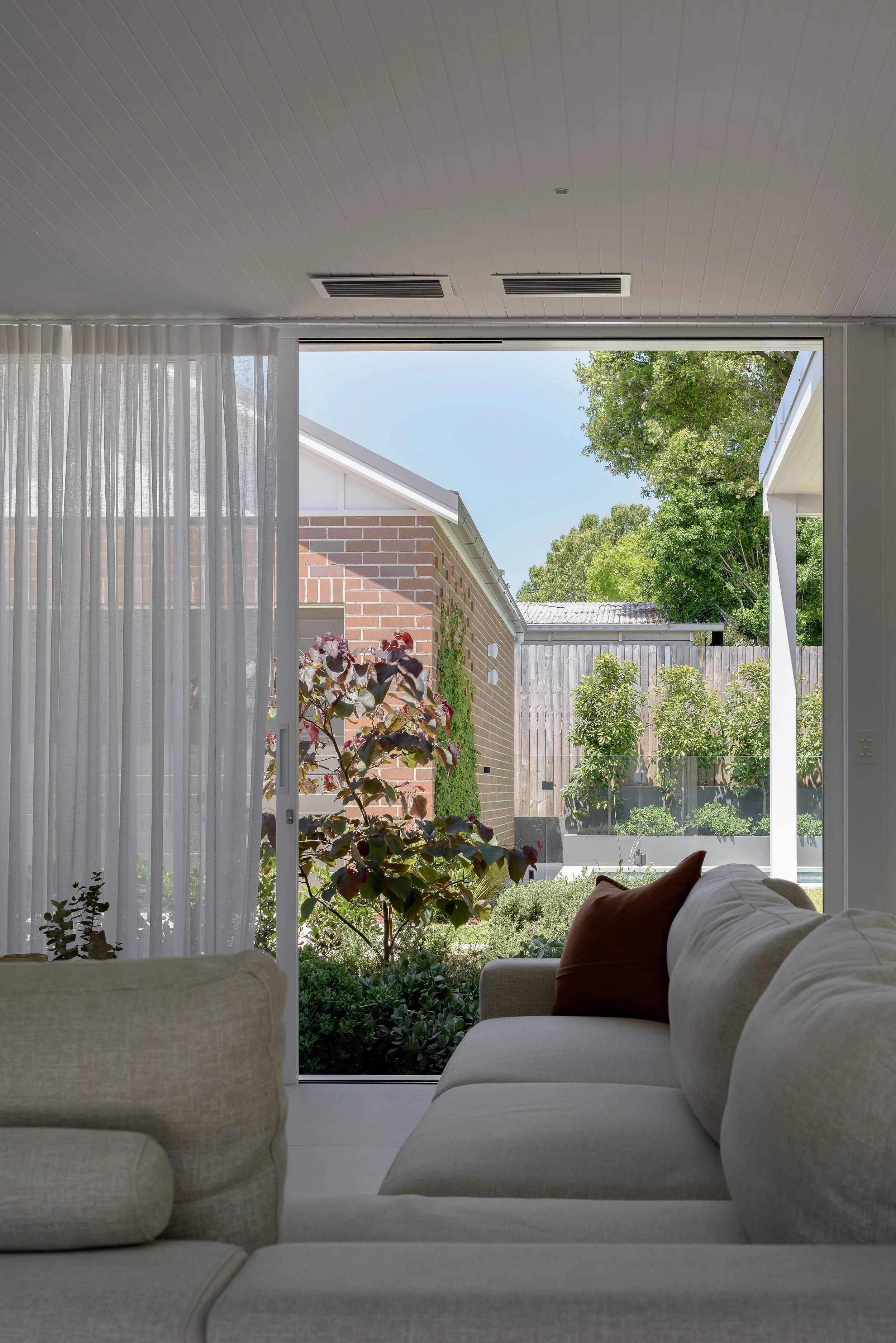
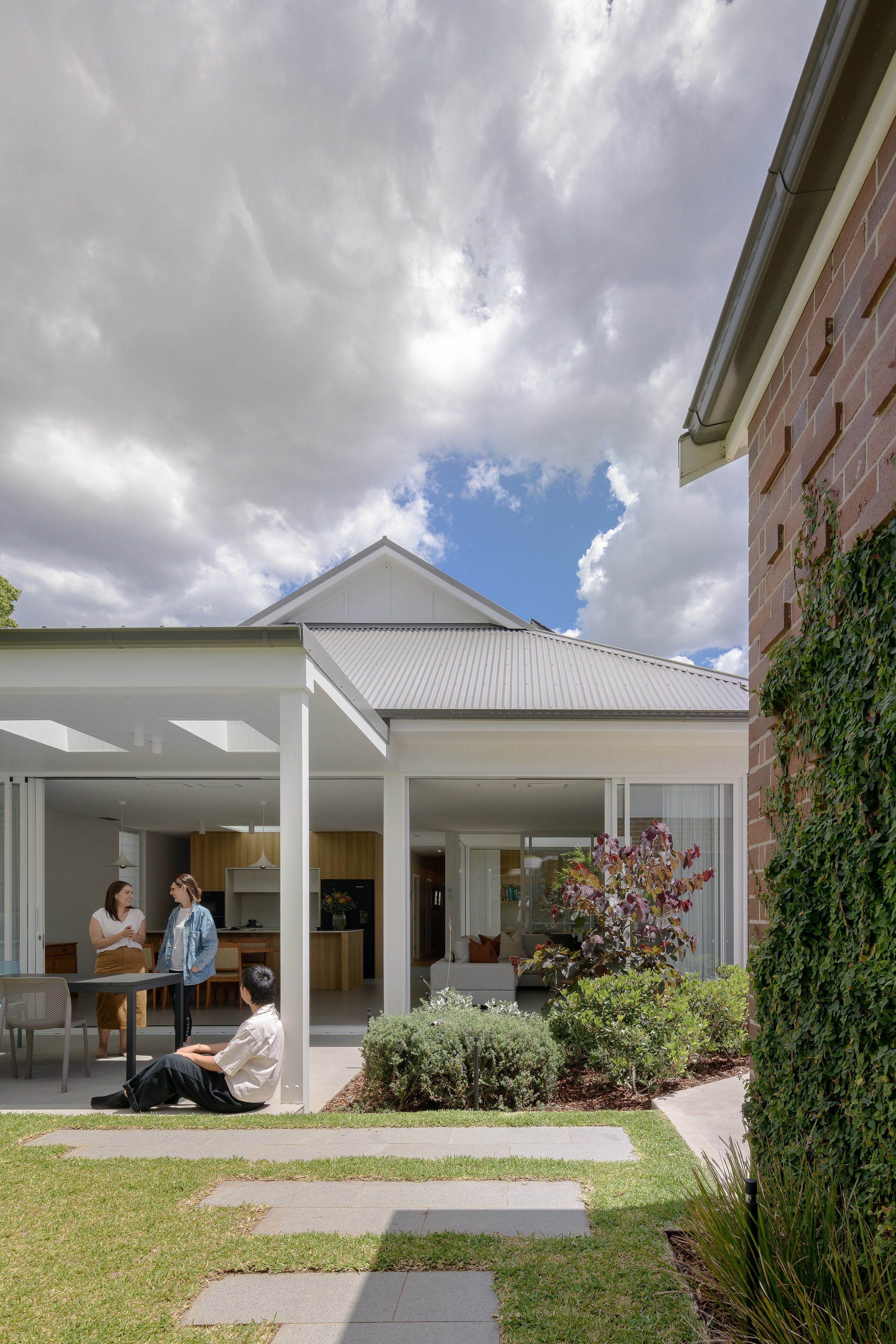
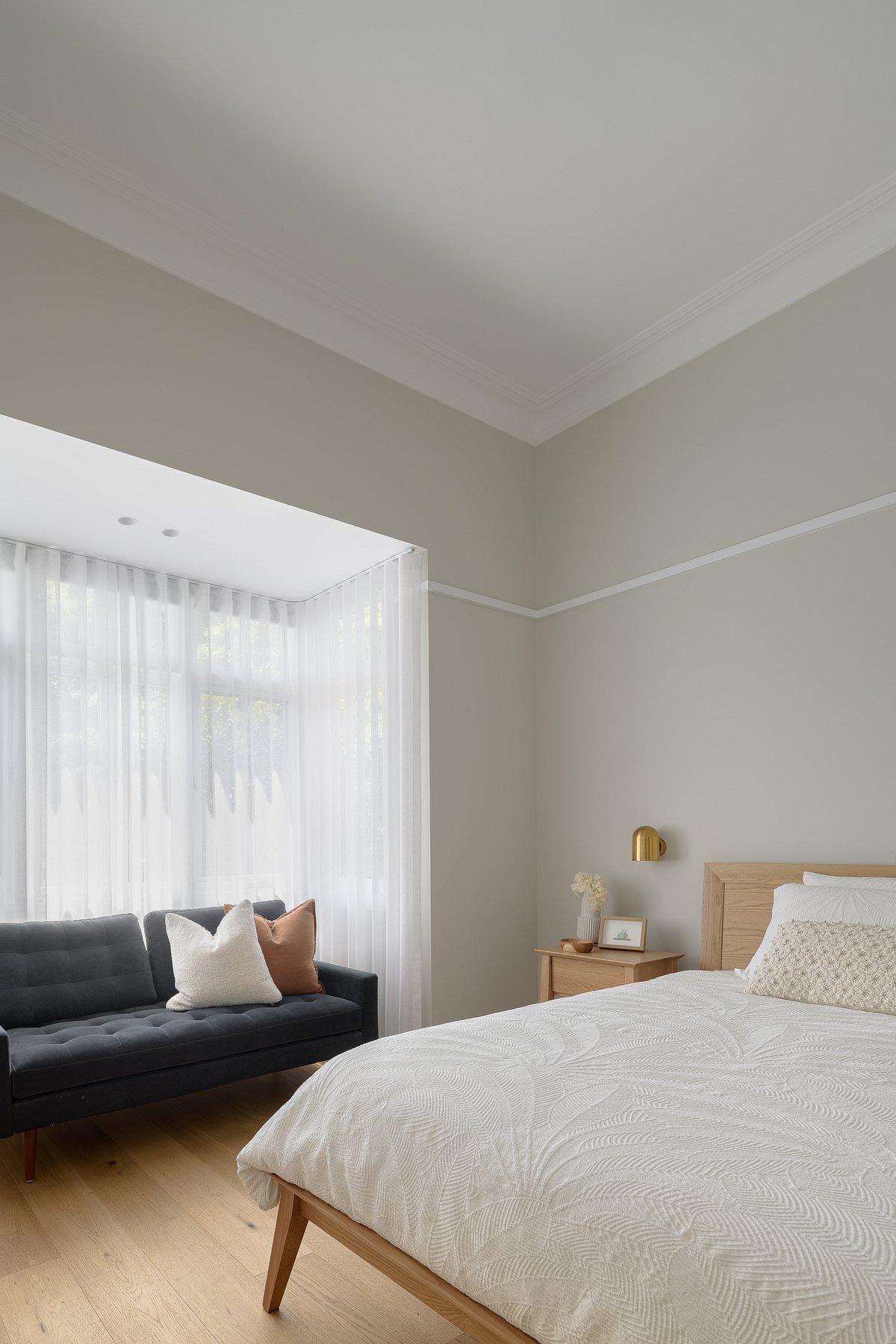
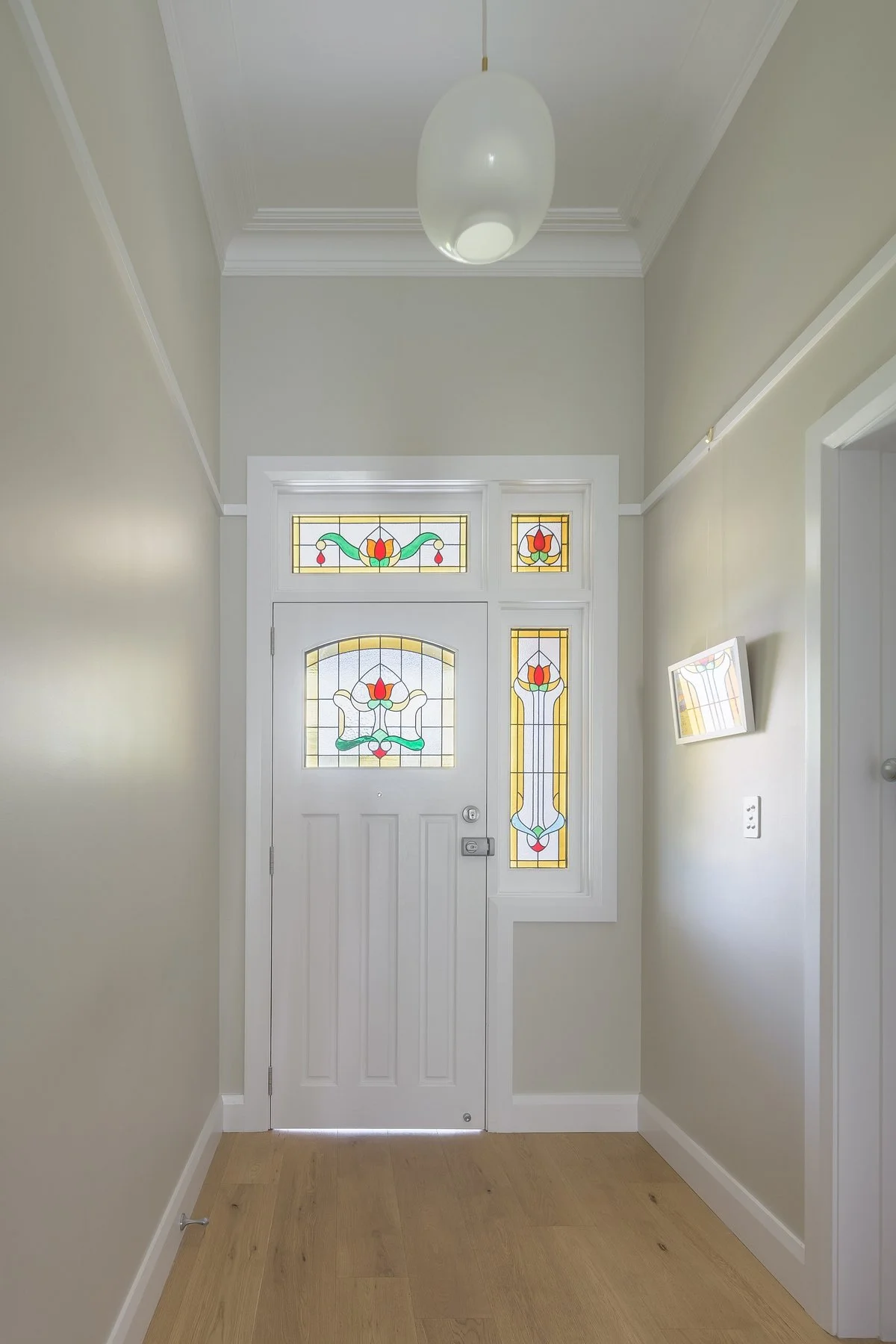
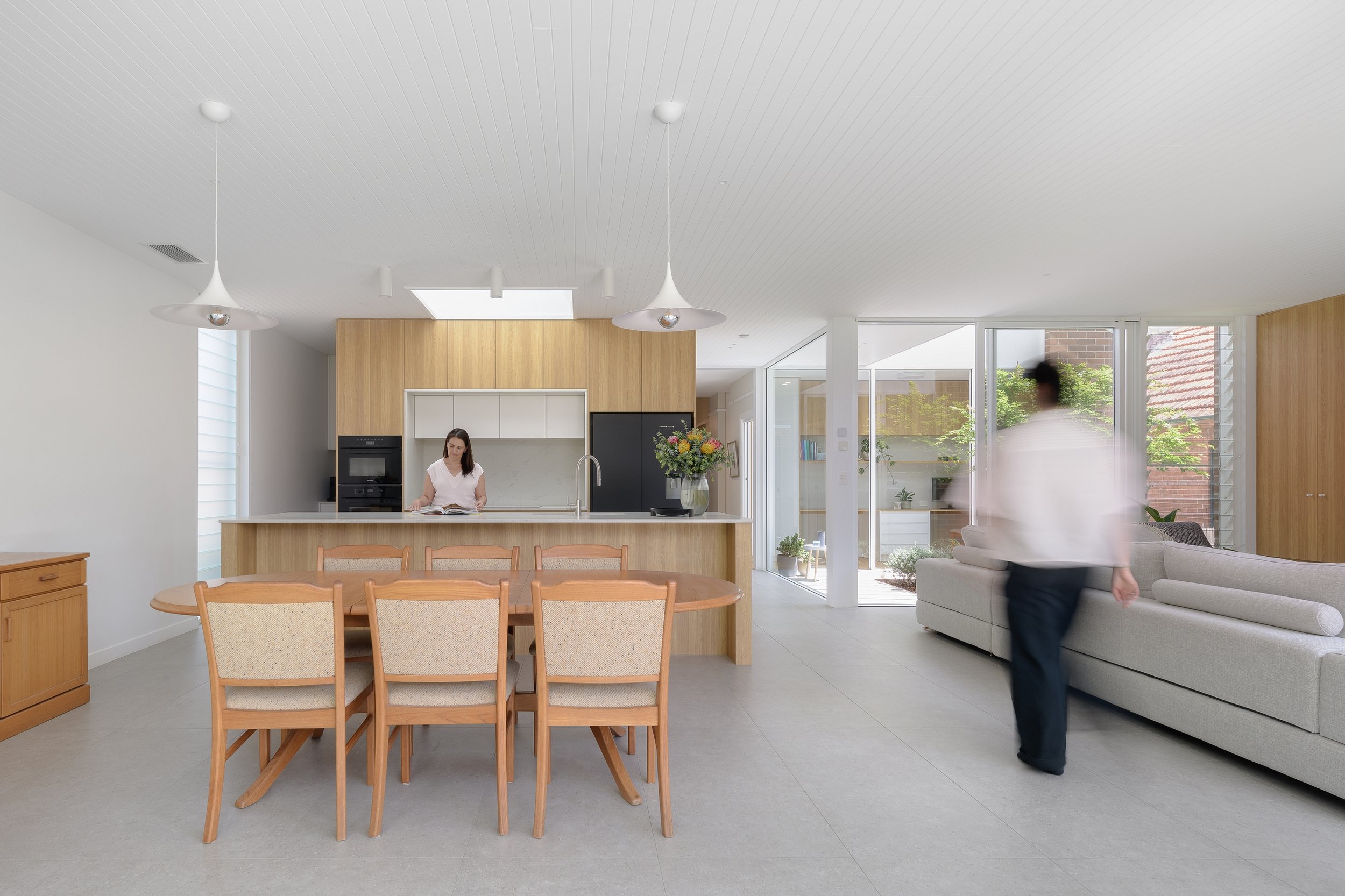
Internally, the planning has been refined and extended. The existing rooms at the front retain their scale, period detailing, and sense of enclosure, while a subtle shift occurs towards the rear, where new, light‑filled living spaces open to the garden. These spaces are defined by calm materiality and considered connections between inside and out. New brickwork, timber, and white v-groove lining boards reference the existing palette without imitation, creating continuity between old and new.
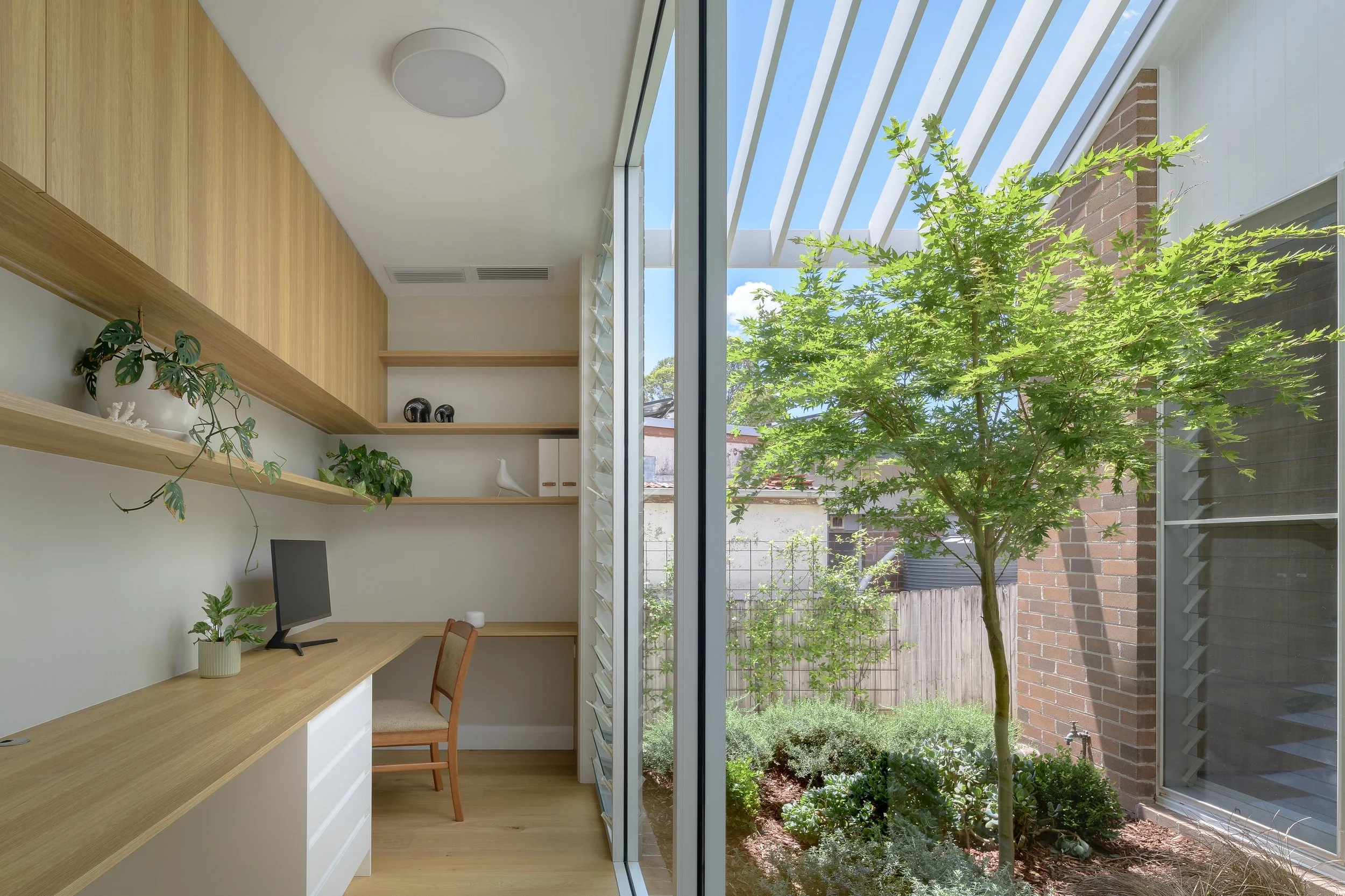
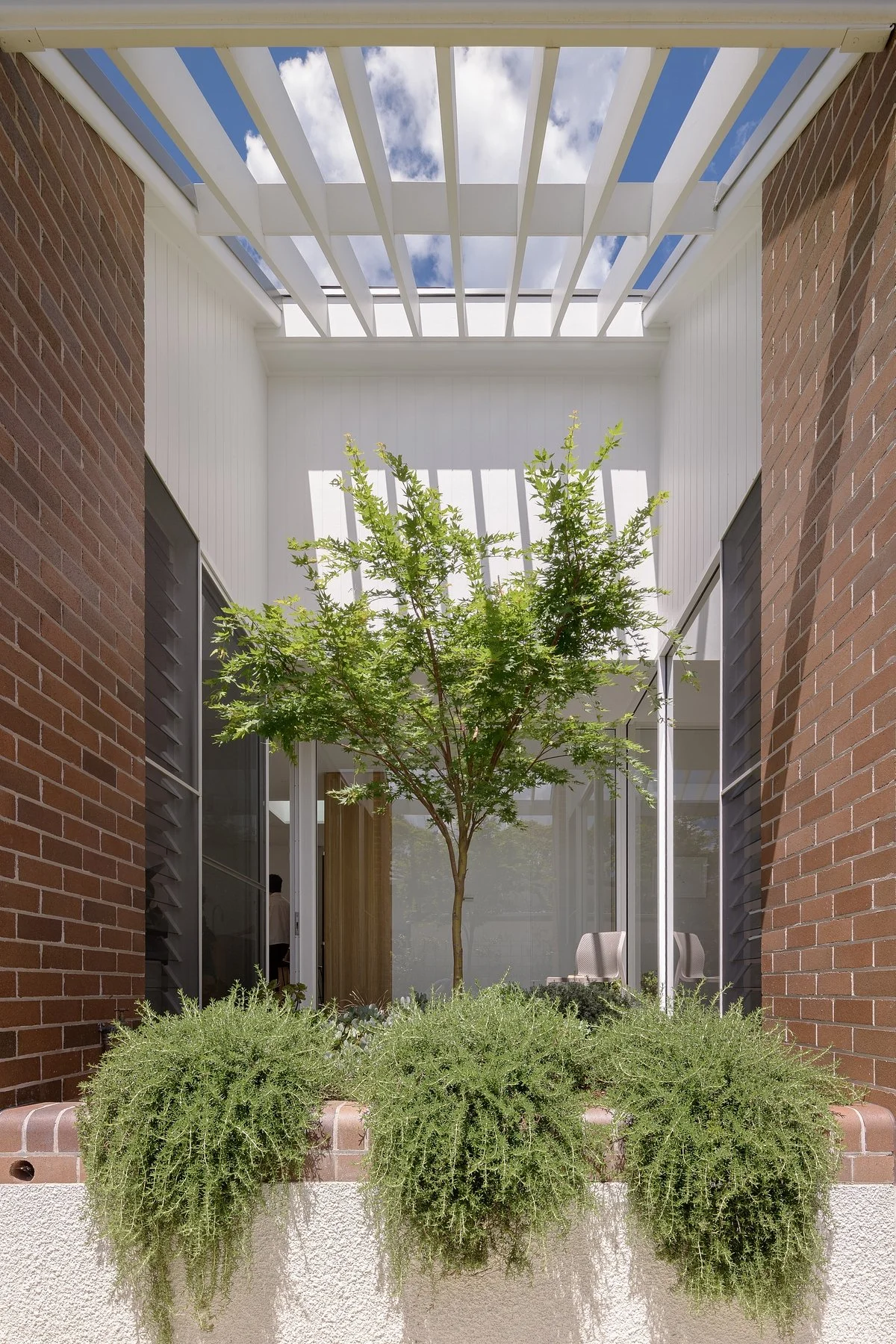
A central courtyard draws light into the depth of the house, offering a moment of quiet greenery at its centre. Beyond, the rear addition opens fully to the landscape, extending the interior living spaces to a covered outdoor terrace, barbecue area, and a new in‑ground pool. The design of the external works mirrors the restraint of the architecture — a freestanding garage with matching brick detailing sits discreetly at the rear of the site, completing the composition.
Within the extended roof volume, a large attic rumpus room has been created, providing flexible additional space for the growing family. Externally, the impact of these new elements remains deliberately understated to respect the conservation context and retain the integrity of the original form.
The completed home reads as a quiet continuation of its history — a project grounded in careful observation, proportion, and detail. It demonstrates how sensitive adaptation within strict planning controls can yield a home that feels both enduring and unmistakably contemporary.
Construction by Cade Hill Constructions
Photography by The Guthrie Project